Avengers: Doomsday — Cast, Release Date, Doctor Doom Origin, Meters, Graphs & What to Expect
The complete skyscraper guide to Marvel’s December 18, 2026 tentpole: RDJ as Doctor Doom, three-universe cast map, comics origin, heat meters, box-office graphs, timeline, FAQs, and Secret Wars setup.
Updated : 1 week ago
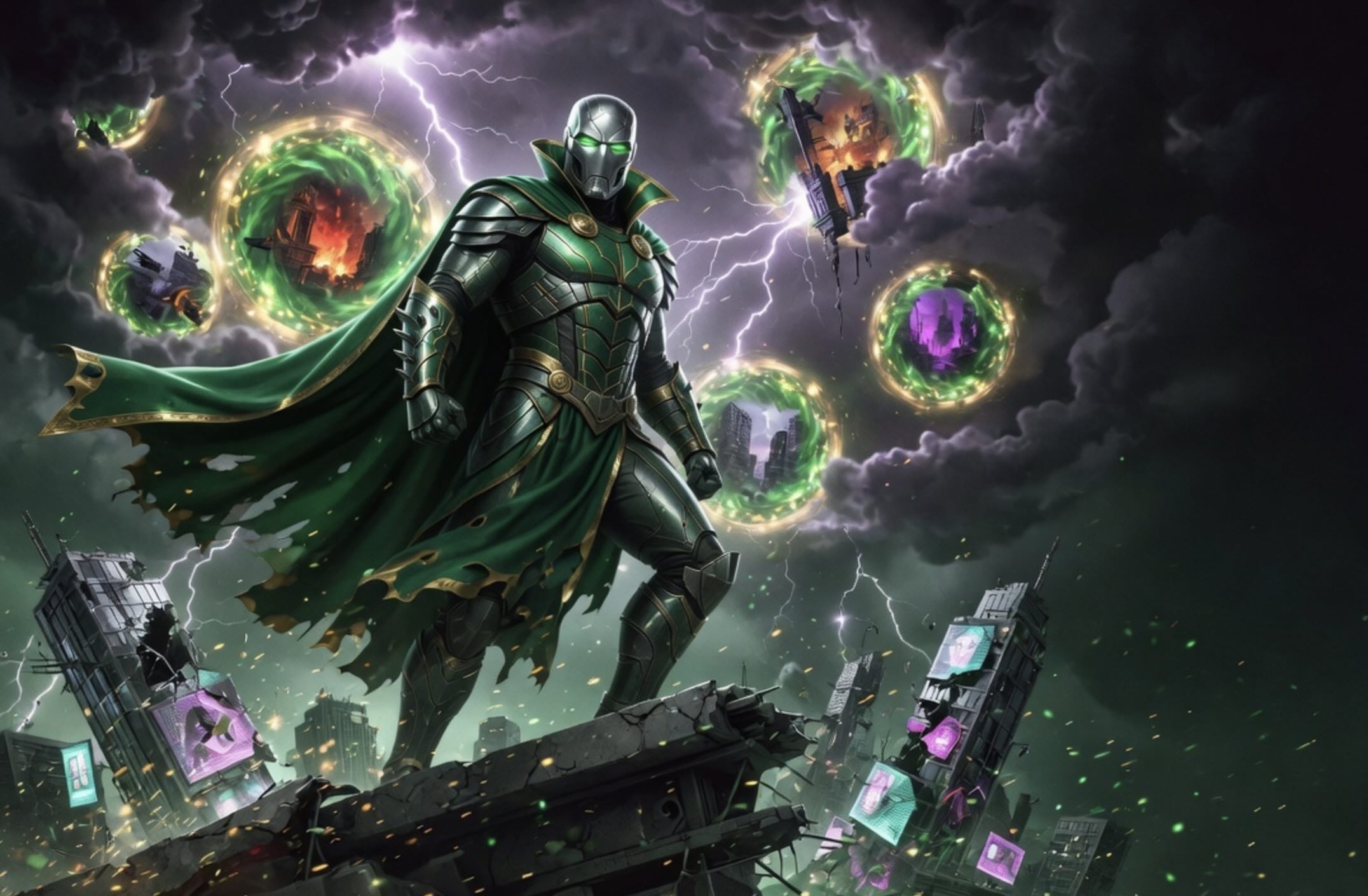
*Hero art is illustrative and not an official Marvel Studios poster.
Avengers: Doomsday — The Complete Guide (Cast, Plot, Doom Origin, Meters & What to Expect)
Avengers: Doomsday is Marvel Studios’ December 18, 2026 Phase Six tentpole — the film that replaces the abandoned Kang Dynasty plan, brings Anthony & Joe Russo back to the Avengers chair, and casts Robert Downey Jr. as Victor von Doom. Fourteen months after Thunderbolts*, heroes from three universes collide to stop an existential threat the MCU has been circling since the Multiverse Saga began: Doctor Doom.
This skyscraper guide packs the confirmed release window, the sprawling cast map, comic-accurate Doom origin context, heat meters, box-office graphs, a production timeline, expected story beats (spoiler-light), and FAQs — updated August 2026.
Avengers: Doomsday — Fan Heat Meters
Editorial snapshot (Aug 2026). Not an official Marvel score. Scores reflect public casting heat, creative pedigree, and how much this chapter has to set up Secret Wars.
Tip: treat high rumor-fog as a reason to wait for trailers and official synopses before locking theories.
Quick facts at a glance
Title: Avengers: Doomsday · US release: December 18, 2026 · Directors: Anthony Russo & Joe Russo · Writers: Michael Waldron, Stephen McFeely, Chris McKenna & Erik Sommers · Music: Alan Silvestri · Studio: Marvel Studios · Distributor: Walt Disney Studios Motion Pictures · Follow-up: Avengers: Secret Wars (December 17, 2027) · Reported runtime class: ~165 minutes.
Premise — three universes, one Doom
Official positioning is unusually clear for a pre-release Avengers film: beloved heroes from three distinct universes are set on a deadly collision course against an existential threat unlike anything they have faced. Kevin Feige and the Russos have described the factions as (1) Avengers, Wakandans, and New Avengers from Earth-616, (2) the Fantastic Four from Earth-828, and (3) the “original” X-Men from a separate universe — all converging on Doctor Doom.
That structure does two jobs at once. Creatively, it justifies the return of Fox-era mutant stars alongside MCU mainstays without pretending every continuity always shared a timeline. Commercially, it turns Doomsday into the Multiverse Saga’s summit meeting before Secret Wars redraws the map in 2027.
Who Is On Screen? Universe Mix
Editorial split of the announced ensemble across the three colliding universes (plus Doom). Screen time will not match this pie — it is a cast-roster map, not a runtime forecast.
Release date — why December 18, 2026 matters
Avengers: Doomsday is scheduled for theatrical release in the United States on December 18, 2026. If you still see May 2026 floating in older social posts or early announcement graphics, that was the initial window from the 2024 SDCC reveal era — the calendar has since locked on mid-December, the same holiday corridor that helped Endgame become a global event.
December positioning signals event-movie treatment: premium large-format inventory, multi-week legs, and a clean year-end runway into awards chatter and 2027’s Secret Wars marketing. International dates typically cluster within days of the US open; always confirm your city’s chain listing in the final fortnight.
Production & Release Timeline
From Kang Dynasty to Doomsday — how we got here
In July 2022 Marvel announced two Avengers films to close Phase Six and the Multiverse Saga: The Kang Dynasty and Secret Wars, with Jonathan Majors continuing as Kang variants. By late 2023 the plan fractured — Destin Daniel Cretton exited, Michael Waldron replaced Jeff Loveness on the script, and Marvel began pivoting away from Kang as the saga’s endgame after Majors’s legal troubles and firing.
July 2024 SDCC flipped the board: the Russo brothers returned, Stephen McFeely rejoined the writing mix, Robert Downey Jr. was unveiled as Doctor Doom, and the film was retitled Avengers: Doomsday. It is one of the sharpest mid-saga course corrections in MCU history — and it reframes every Multiverse breadcrumb from Loki through Deadpool & Wolverine as runway toward Latveria’s monarch rather than a Conqueror dynasty.
Cast — the collision roster
Few MCU ensembles have been this deliberately cross-franchise. Earth-616 brings Captain America (Sam Wilson), Thor, Ant-Man, Shang-Chi, Wakandan leaders, New Avengers faces from Thunderbolts*, and — critically — Chris Evans as Steve Rogers, returning after what looked like a definitive Endgame exit. Earth-828 contributes Pedro Pascal’s Reed Richards, Vanessa Kirby’s Sue Storm, Ebon Moss-Bachrach’s Ben Grimm, and the Fantastic Four’s family dynamic that historically defines Doom’s rivalry. The third universe delivers Patrick Stewart, Ian McKellen, James Marsden, Channing Tatum’s Gambit, Kelsey Grammer, Rebecca Romijn, Alan Cumming and more from the Fox X-Men lineage.
Roster based on publicly announced casting as of mid-2026. Roles marked * follow widely reported / promotional alignment and may be refined by final credits.
Robert Downey Jr.’s Doom is the gravitational center. The Russos have called Doom one of the most complex characters in comics and said Downey was the one actor who could carry that load after a decade as Tony Stark. Downey has described building his own backstory reference for the roleperformance and contributing costume ideas; publicity has also noted a heavily accented vocal approach — a clear signal this is not Iron Man in a green cloak.
Origin of Doctor Doom — comics biography (spoiler-safe for the film)
Victor von Doom debuted in Fantastic Four #5 (1962), created by Stan Lee and Jack Kirby, with a fuller origin in Fantastic Four Annual #2 (1964). Understanding that origin is the best prep for Doomsday even if the MCU remixes details — because the film’s casting of Downey opposite Pedro Pascal’s Reed only works if you feel the old wound between them.
Born to a Romani community in the small European nation of Latveria, Victor loses his mother Cynthia — a witch whose bargains with darker forces end in tragedy — and later his father Werner, a healer destroyed by the cruelty of Latveria’s ruling class. Orphaned, Victor digs into his mother’s mystical artifacts and swears that knowledge, will, and power will never leave him helpless again. A scholarship takes him to an American state university, where he meets another prodigy: Reed Richards. They are not friends. They are mirrors with opposite ethics.
Victor builds a machine meant to pierce dimensions and reach his mother’s spirit. Reed warns of calculation errors. Doom proceeds anyway. The device explodes. The scarring is often described as relatively minor in text — but Doom’s pride treats it as unbearable. Expelled and humiliated, he wanders until a Tibetan monastery forges the iron mask and armor that will hide his face forever. He returns to Latveria, overthrows its monarch, renames the capital Doomstadt, and rules as a tyrant who insists he alone can bring order to a chaotic world.
That is the core: genius + sorcery + wounded pride + a nation as a weapon. Doom is not a brute like early MCU Thanos marketing suggested for “big villains.” He is a head of state, a scientist who can out-gadget Tony Stark’s lineage, a sorcerer who can stand near Strange-level mysticism, and a man who needs to prove he was right about Reed Richards. Doombots, time platforms, stolen Power Cosmic moments, and even god-emperor “Battleworld” arcs later expand the myth — but the Latveria origin is the skeleton everything hangs on.
For Doomsday viewers: watch for how the MCU answers three origin questions without dumping a 20-minute prologue. (1) Is this Victor’s first public emergence, or does Latveria already exist off-screen? (2) How much Reed history do Pascal and Downey share before the opening logos? (3) Does the mask hide shame, strategy, or both? Trailers will tease armor; the origin is about why he needs it.
Powers, armor, and why Doom threatens a multiverse
Classic Doom combines titanium (later advanced) armor with force fields, gauntlet blasts, flight systems, and an army of robotic servants — including Doombots that can impersonate him. Beyond tech, he is a master of mystic arts with one of the deepest occult libraries on Earth. That dual mastery is why he scales to “Avengers + Fantastic Four + X-Men” stakes: science alone would be a Stark problem; magic alone a Strange problem; Doom is both, with a country and an ego behind him.
In Secret Wars comics lore, Doom has even seized godlike patchwork-reality power. The MCU may not copy that beat beat-for-beat in 2026, but Doomsday’s job is to make audiences believe Doom could eventually author a Battleworld-scale crisis by 2027. Every portal, stolen artifact, or multiversal alliance on screen is a credibility deposit toward that climax.
What to expect (spoiler-light)
- Three-universe collision: Earth-616 heroes (Avengers, Wakandans, New Avengers), Fantastic Four from Earth-828, and “original” X-Men from a separate universe facing one existential threat.
- Doctor Doom as the axis: Not a cameo villain — the Russos have framed Doom as complex enough to carry the saga pivot after the Kang reset.
- Steve Rogers returns with purpose: Evans has said the story gives a “very real reason” Rogers is needed now; Nomad mantle teased in publicity.
- Fantastic Four vs Doom rivalry: Reed Richards vs Victor von Doom is the classic intellectual war; expect ego, ethics, and technology/magic clashes.
- Direct runway into Secret Wars (2027): Doomsday is setup + payoff hybrid — large set pieces now, larger board for next year.
- ~165-minute runtime class: Reported theatrical length around that range — plan intermission/snacks accordingly.
- Premium formats matter: Multiverse VFX + Silvestri score favor IMAX / large-format if your hall is strong.
Also expect tonal seriousness from the Russos — Channing Tatum has said he will not “go full Cajun” gag-mode for Gambit here — and a score language Alan Silvestri can braid with prior Avengers motifs. Marketing will oversell some cameos and undersell character turns; use official trailers and synopses as the ceiling for what is “known.”
Box-office context — meters for the money
Endgame’s roughly $2.8B worldwide remains the franchise ceiling. Infinity War cleared about $2.05B. Doomsday enters with peak cast novelty (RDJ’s heel turn, Evans’s return, X-Men nostalgia, Fantastic Four heat) but also franchise fatigue risk after a mixed Multiverse stretch. Editorial projection in the graph below uses a wide $1.8–2.5B band — not a studio number. Opening weekend will tell you whether December premium formats are converting curiosity into event tickets.
Avengers Box-Office Context Graph
Prior Avengers tentpoles vs an editorial projection band for Doomsday. *Projection only — not a studio forecast. Endgame remains the ceiling.
How to watch it best
If your city has a true large-format / Laser-class hall with decent seats, Doomsday is built for that canvas — multiverse VFX, crowd scenes, and Silvestri’s low end all scale. Skip premium if only extreme edge seats remain; a centered standard auditorium often beats a bad IMAX geometry. Decide 3D vs 2D from the trailer language closer to release; do not assume every Marvel title needs glasses.
Homework order if you are behind: Thunderbolts* (New Avengers status quo) → The Fantastic Four: First Steps (Earth-828 relationships) → optional Fox X-Men highlights if you want mutant face familiarity → then Doomsday. Loki and Deadpool & Wolverine remain useful Multiverse context but are not mandatory scene-for-scene.
Secret Wars — the 2027 shadow
Doomsday is not a standalone victory lap. Marvel has already dated Avengers: Secret Wars for December 17, 2027. That means plot threads that feel unresolved in 2026 may be intentional. The healthiest fan stance: enjoy Doomsday as a complete night out, and treat dangling portals as invitations rather than plot holes.
Common questions
When does Avengers: Doomsday release?
In the United States on December 18, 2026. Earlier May 2026 messaging from the announcement window was superseded; treat Dec 18 as the locked theatrical date unless Disney/Marvel revises it.
Is Robert Downey Jr. playing Iron Man again?
No — he is playing Victor von Doom / Doctor Doom. The Russos have been explicit that this is a new role built around Doom’s complexity, not a soft reboot of Tony Stark.
What happened to Kang the Conqueror / The Kang Dynasty?
After creative and casting upheaval, Marvel moved off the Kang Dynasty title. Waldron, McFeely, McKenna & Sommers write Doomsday with Doom as the Multiverse Saga’s new apex threat.
Do I need to watch Fantastic Four and Thunderbolts* first?
Yes for maximum clarity. The premise is set fourteen months after Thunderbolts* and pulls the Fantastic Four (Earth-828) into the collision. X-Men continuity from the Fox films is also in play for that third universe.
Is this the last Avengers film?
No. Avengers: Secret Wars is scheduled for December 17, 2027 as the Multiverse Saga climax.
Who directs?
Anthony and Joe Russo — the team behind Infinity War and Endgame — with Kevin Feige and Jonathan Schwartz producing for Marvel Studios.
Will there be mid-/post-credit scenes?
Marvel has not confirmed the final card plan. Historically, Avengers tentpoles use tags to seed the next board — expect speculation until release week, then verify in-theater.
Bottom line
Avengers: Doomsday is the MCU’s bet that Doctor Doom — not another Kang variant — can reunite generations of Marvel film fans under one crisis. With the Russos directing, Downey reinventing himself as Latveria’s monarch, Evans returning, Fantastic Four crossing over, and X-Men legends in the mix, December 18, 2026 is the most loaded Avengers date since April 2019. Use the meters above as a hype check, the origin section as character prep, and the FAQs when the rumor fog thickens. Latveria is coming — and the Multiverse just found a ruler who thinks he can improve it.


