Not every “IMAX” ticket buys the same picture. Before you pay a premium for a tentpole like Avatar: Fire and Ash—or the next large-format release—you need a practical map of Laser, Xenon, GT, and MTC so the format matches the money and the story you want to see.
Theater tech changes when chains upgrade lamps and projectors. Treat venue labels as expected until you re-check the current showtime listing or the theater’s own format note on booking day.
What “IMAX levels” actually mean at the ticket counter
On booking apps, almost everything is labeled simply “IMAX” or “IMAX 3D.” Behind that label sit different projection stacks: older digital xenon-lamp systems, single or dual laser systems, and true large GT auditoriums. MTC and similar multiplex brands add their own hall sizes and seating geometry on top.
Think of IMAX as a certification and brand promise, not a single technical profile. Two halls with the same logo can differ in brightness, contrast, screen height, and how much of the film’s expanded aspect ratio you actually see.
For a Cameron-scale film with dark ash, glowing embers, and deep 3D, those differences are not trivia—they change whether shadow detail survives and whether the frame feels towering or just “a bit bigger.”
- Laser: higher sustained brightness and deeper blacks on many titles
- Xenon: common, capable, more sensitive to lamp age and dimming
- GT: largest dual-laser class auditoriums where available
- MTC / local IMAX halls: convenience and density vary widely by city
Laser IMAX — what you are paying for
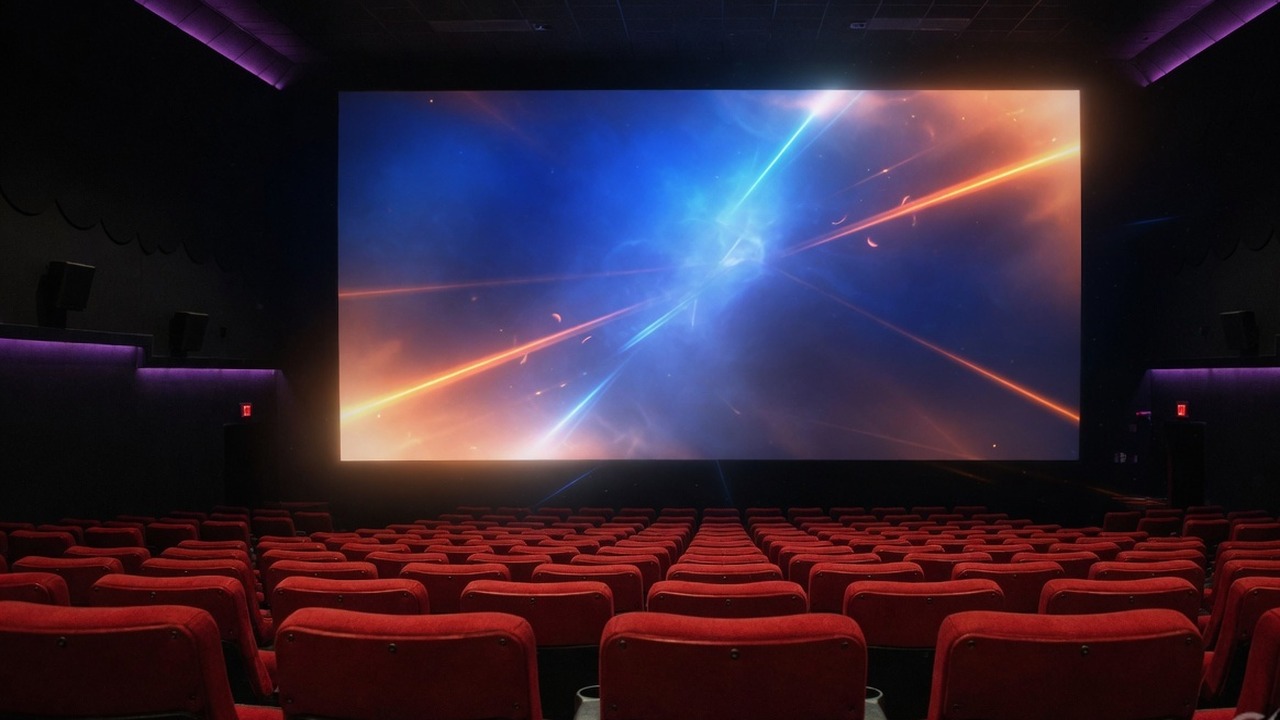
Laser projection is the format most viewers mean when they say “best IMAX.” It typically holds brightness better across a long 3D runtime and keeps contrast in dark, smoky, or underwater sequences that define Avatar’s visual language.
If the booking page or theater explicitly lists Laser—or you know the hall from prior upgrades—this is the default pick for a spectacle-first watch, assuming you can still get a strong seat.
Laser does not fix a terrible seat. Extreme front rows stretch geometry; far sides crush the immersive width. Format first, then seat geometry.
Xenon (lamp) IMAX — solid upgrade, known limits
Many multiplex IMAX rooms still run digital xenon-lamp projectors. They remain a clear step up from standard 2K/4K PLF rooms for size and sound branding, and they are often easier to find near home.
The tradeoff is consistency. As lamps age, peak brightness and punch can drop, which hurts 3D and dark VFX. You rarely see lamp hours on a ticket—so local reputation and recent audience notes matter more than marketing copy.
Pick Xenon deliberately when travel time, price, or sold-out Laser inventory make Laser unrealistic. Do not pretend it is identical to dual-laser GT.
GT IMAX — when size and dual-laser change the night
GT (Grand Theatre) class halls are the top end of the IMAX ladder: very large screens, dual-laser projection in modern installs, and seating that can fully exploit expanded aspect ratios when the film is mastered for them.
Not every city has a true GT. When one is in range for a tentpole weekend, it is usually worth the trip if seats are mid-auditorium. If the only GT seats left are extreme front or corner, a well-placed Laser hall can beat a bad GT seat.
Confirm with the chain’s hall name and past large-format releases rather than assuming every “IMAX with Laser” is GT scale.
MTC and multiplex IMAX halls — convenience vs pure format
MTC and other multiplex partners operate many of the IMAX-branded screens you will actually book. Hall size, rake, and projector class differ location by location even inside one brand.
Use a simple rule: brand name gets you in the door; hall reputation and projector class decide whether the premium is smart. A convenient MTC Xenon two metro stops away can beat a GT across the city if you would arrive stressed and late.
For families, factor bathroom access, parking, and showtime end for kids—format quality collapses if half the group is miserable.
Avatar: Fire and Ash — format priorities for this kind of film
Avatar films are designed as large-format showcases: deep color, heavy 3D, and environments that reward height and brightness. That stack favors Laser or GT when available.
If you already saw earlier Avatar chapters on a weak lamp hall, upgrading to Laser for Fire and Ash is one of the few “same franchise, different night” upgrades that often feels obvious in the first reel.
If budget only allows one premium ticket in a group, put the most spectacle-sensitive viewer in the best format seat and keep others in a strong standard or PLF rather than splitting badly across a sold-out Laser house.
Seat map rules that beat format branding
Center third, roughly middle-to-rear of the center block, is the practical sweet spot for most IMAX geometry. Avoid the first few rows unless you know you like aggressive immersion.
For 3D, slight off-center is fine; extreme sides are not. If the only open seats are front-side corners, step down a format or change showtime.
Arrive early enough to settle glasses and avoid walking in after the expanded aspect ratio has already framed the prologue—late entry hurts more in IMAX than in standard.
Red flags before you pay the IMAX premium
Red flag: the app says IMAX but local fans know the screen is a small retrofit barely larger than the chain’s non-IMAX PLF.
Red flag: no Laser mention, older hall, and social posts about dim 3D—budget Xenon is fine, full premium pricing may not be.
Red flag: scalper or unofficial resale of “IMAX laser” tickets with no transferable QR from the official chain app.
Red flag: you are booking only because of FOMO while a midweek Laser show would be cheaper and better seated.
- Verify hall name and format line on the official chain page
- Prefer center seats over logo prestige
- Re-check 24 hours before showtime
- Have a backup hall if Laser sells out
Simple decision matrix you can screenshot
Spectacle-first and Laser/GT available with good seats → book it.
Only Xenon available, good seats, reasonable price → book if travel is easy.
Premium price + bad seats → skip or change showtime.
Story-first watch or fatigue risk → standard or non-IMAX premium may be smarter.
Keep this matrix for any future tentpole—not only Avatar—so you stop re-litigating the same debate in the ticket queue.
Ticket price, formats, and whether the premium is worth it
IMAX tickets usually sit above standard 2D and often above Dolby or other premium labels depending on city and chain. Pay the jump only if the hall’s actual projector class and screen size deliver a clear step up for the title’s dark contrast, 3D depth, or expanded framing.
Compare all-in cost: convenience fee, 3D glass charge if any, parking or metro, and whether you would rewatch in a lesser hall. A midweek Laser show can beat a packed Friday Xenon show on both picture and experience.
If two IMAX halls are priced the same, prefer the larger screen and Laser label over a small “IMAX” room that is only slightly bigger than PLF competitors.
When to book and what to re-check on ticket day
For major releases, prime IMAX slots open early and center seats vanish first. Book when the format line is published, then re-check 24–48 hours before showtime in case the chain moves the print or renames the hall.
If Laser inventory is sold out, decide deliberately: Xenon IMAX is still usually better than standard digital, but it is not the same as dual-laser GT. Have a second hall ready rather than panic-buying the worst seat in the “best” brand name.
Who should pick Laser, Xenon, GT—or skip IMAX
Choose Laser (or GT Laser where available) if you care most about brightness, black levels, and VFX-heavy 3D and you can sit near the center third of the auditorium.
Choose Xenon IMAX if it is your only practical large-format option, tickets are cheaper, or travel time to a Laser/GT hall is unreasonable—still a real upgrade over standard, with eyes open about lamp systems.
Skip the IMAX premium if the only open seats are extreme side/front rows, the “IMAX” screen is known to be a small retrofit, or you mainly want story over spectacle and a quieter standard show suits you better.
Conclusion
IMAX is a family of experiences, not one switch. For Avatar: Fire and Ash and other tentpoles built for large formats, match Laser/GT when you can, accept Xenon when logistics win, and never pay premium prices for a bad seat just to keep the brand name on the ticket.
Story, cast, and creative signals
For IMAX Laser vs Xenon vs GT screen choice, the useful prep is not a spoiler hunt. It is a short list of creative signals that would change whether you show up on day one: returning leads, a new showrunner, a format shift (weekly vs binge), or a confirmed final-season arc.
Marketing will undersell some turns and oversell others. Use trailers and official synopses as the ceiling for “known,” and keep forum theories in a separate mental bucket so you do not plan money or travel on fan edits.
If this is a franchise entry, ask what problem the new chapter is solving: soft reboot, direct sequel, spin-off soft landing, or a premium limited event. That frame changes how much prior continuity you actually need.
Common questions
Is Laser always better than Xenon?
For brightness and contrast on dark VFX-heavy films, Laser is usually the better pick when seats are comparable. Xenon remains a real upgrade over standard digital.
What does GT mean?
GT refers to large Grand Theatre-class IMAX auditoriums, often dual-laser in modern installs. Availability is limited by city.
Does every IMAX show Avatar in an expanded ratio?
Only if the presentation and hall support it. Confirm format notes when possible; do not assume from the logo alone.
Should I buy 3D or 2D IMAX?
For Avatar-style titles built around 3D depth, 3D is the intended showcase if you tolerate glasses. If 3D bothers you, a strong Laser 2D can still beat a weak hall.
How do I know my local hall is Laser?
Check the chain’s showtime format line, theater site, or recent upgrade announcements. When unsure, call the box office and ask for the projector type by hall name.